
Choosing the Right Liquid Filling and Packaging Machine for Consistent Output
Packaging lines built around liquid and paste products face a stubborn problem: viscosity changes with temperature, humidity shifts affect film integrity, and speed targets rarely leave room for error. A liquid filling and packaging machine has to absorb all that variability without slowing down the line. This article looks at what actually determines reliable performance, using the CB-VPZ52 automated packaging system as a working example of how the mechanics translate into fewer stoppages and cleaner output.
Why Liquid Packaging Lines Break Down More Than Dry Ones
Dry product packaging tolerates a certain amount of drift. Liquid and paste packaging does not. A few grams of variance in fill weight can trigger seal failures downstream, and film that stretches unevenly under humidity will wrinkle or tear at the sealing station. These are mechanical realities, not edge cases.
Most breakdowns trace back to two causes: film tension that isn’t adjusted for the material being used, and electrical components that weren’t built for the moisture levels common in food and chemical plants. Once you understand which of these two is causing the problem, the fix becomes obvious rather than a guessing game.
Material Compatibility Starts With the Frame
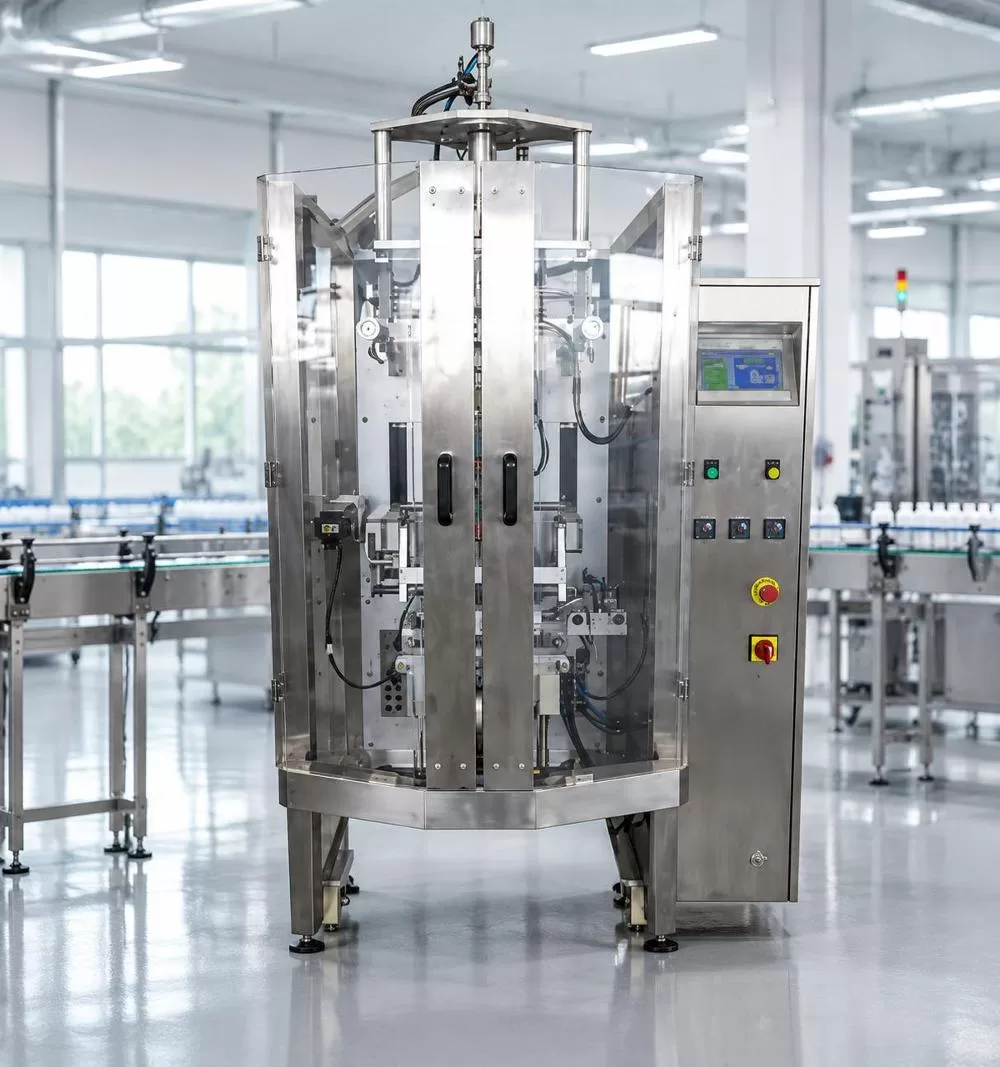
Stainless steel isn’t chosen for liquid packaging equipment because it looks industrial. It resists corrosion from cleaning agents, product residue, and ambient humidity in ways that painted mild steel simply cannot match over years of continuous use. According to the product specifications, over 90% of the CB-VPZ52’s spare parts are made from stainless steel, which matters most in facilities running cleaning-in-place protocols or handling acidic liquid products.
Hygiene compliance in food and pharmaceutical settings depends on surfaces that don’t pit or flake. A frame that degrades introduces particulate risk into the product stream, which is the opposite of what a packaging line is supposed to prevent.
The IP6 Rating Problem Nobody Talks About Enough
Buyers often focus on speed and fill accuracy while treating electrical protection as an afterthought. That’s backwards for any plant with washdown procedures or high ambient moisture, which describes most beverage and sauce production environments.
The CB-VPZ52’s electrical components carry an IP6 rating according to the manufacturer’s specifications, meaning the housing is built to keep out dust and resist water exposure during cleaning cycles. Machines without adequate ingress protection are more prone to control panel faults in wet environments, and those faults are expensive because they usually mean unscheduled downtime rather than planned maintenance.
If your facility runs frequent washdowns, ask any supplier directly what IP rating the electrical enclosure carries. It’s a five-second question that saves months of intermittent troubleshooting later.
Film Tension Control and Why Swing Arms Matter
Here’s a detail that gets overlooked until it causes a jam: film doesn’t feed at a constant rate as the roll diameter shrinks. A fixed-tension system that works fine on a full roll will start wrinkling film once the roll is half spent. The CB-VPZ52 addresses this with a swing arm rubber roller paired with a servo motor driver, which adjusts tension automatically as the roll unwinds.
This kind of automatic adjustment removes a task that used to require an operator checking the line every twenty minutes. It also explains why the machine supports upper and lower adjustable film pulling methods, letting one unit handle different bag lengths and film materials without a full retooling.
Combined with a material testing photocell that monitors the film in real time, the system catches feeding irregularities before they become torn bags or short seals. That feedback loop is what separates a machine that runs unattended for hours from one that needs constant supervision.
Matching Sealing Method to Product Type
Not every liquid or paste needs the same sealing approach, and this is where a lot of buyers pick the wrong configuration. Thin, low-viscosity liquids seal differently than thick pastes, and line speed requirements change the calculus further.
The CB-VPZ52 offers two horizontal sealing configurations:
- Cylinder-powered sealing — suited to standard speeds and products where seal timing tolerance is moderate.
- Fast servo-driven transverse sealing — suited to higher throughput lines where seal placement accuracy has to hold steady even as speed increases.
Choosing between them isn’t about picking the "better" option in the abstract. It’s about matching sealing dynamics to your actual product viscosity and your target output per minute.
Reading the Spec Sheet the Right Way
Technical specifications only mean something in context. A 30 bags/min rating tells you little on its own, but paired with bag dimensions and film thickness range, it tells you whether the machine fits your product line at all.
| Specification | Value |
|---|---|
| Max Packing Speed | 30 bags/min |
| Film Width Range | 160mm–520mm |
| Bag Length | 120mm–350mm |
| Bag Width | 80mm–250mm |
| Bag Type | Pillow bag |
| Film Thickness | 0.04mm–0.09mm |
| Filling Accuracy | ±1% |
| Power Supply | 3.4KW, 220V, 50/60Hz |
| Air Consumption | 0.8MPa, 0.5cbm/min |
| Dimensions | 1610 x 1460 x 2340mm |
| Weight | 560kg |
Filling accuracy of ±1% is worth pausing on. For liquid products sold by volume or weight, that tolerance directly affects compliance with labeling regulations and, over a production run, it affects raw material cost. A wider tolerance might seem harmless until you multiply the overfill across a full shift.
Where This Equipment Fits in Real Production
A liquid filling and packaging machine like the CB-VPZ52 is built around pillow bag formats, which makes it a fit for specific categories rather than a universal solution. Based on its construction and rated environment tolerance, it applies to:
- Liquid and paste products in food and beverage manufacturing
- Viscous liquid packaging in chemical processing
- High-speed lines needing consistent bag sealing without manual intervention
- Facilities requiring IP6 waterproof protection due to washdown or humidity conditions
Outside these categories, such as rigid container filling or extremely high-viscosity pastes requiring different pump mechanics, a different machine class would be more appropriate.
Common Questions About Liquid Filling and Packaging Machines
Does film thickness affect sealing quality?
Yes. Thinner film seals faster but tears more easily under tension, while thicker film needs more heat and dwell time at the sealing bar. The CB-VPZ52’s 0.04–0.09mm range covers most common packaging films, but operators should still test their specific film stock before running full production.
Can one machine handle multiple bag sizes without retooling?
Within a machine’s stated range, yes. The CB-VPZ52’s adjustable film pulling and bag size range (120–350mm length, 80–250mm width) allow size changes through settings adjustment rather than hardware replacement, though very large size jumps may still require component swaps.
Why does electrical protection rating matter for packaging equipment?
Because control panels and sensors are the first components to fail in humid or washdown-heavy environments. An IP6 rating protects against dust and water ingress, reducing the failure rate that otherwise shows up as unplanned downtime.
Is higher packing speed always better?
Not if it compromises fill accuracy or seal integrity. A 30 bags/min rating with ±1% filling accuracy is a more useful benchmark than raw speed alone, since consistent output matters more than peak throughput for most production schedules.
Matching the Machine to the Problem, Not the Spec Sheet
The right liquid filling and packaging machine isn’t the one with the most impressive numbers. It’s the one whose tolerances, sealing method, and protection rating match the actual conditions on your production floor. For us at Baopack, that’s the starting point for every equipment discussion: what the product is, how the environment behaves, and where the current line is losing time. A machine like the CB-VPZ52 earns its place on a floor by solving specific friction points, film tension drift, humidity exposure, sealing inconsistency, rather than by claiming to do everything at once.


-
VFFS Equipment: The Ultimate Guide to Vertical Form Fill Seal Technology
13-03-2026 -
The Essential Guide to Weight Packing Machines for Precision Weighing
12-03-2026 -
Power Packing Machine: The Ultimate Guide to Heavy-Duty Packaging Efficiency
11-03-2026 -
Weigher Packing Machine: The Definitive Guide to Precision Weighing & Packaging
10-03-2026 -
Auger Type Powder Filling Machine: The Ultimate Guide to Precision Packaging
09-03-2026 -
Advanced Packing Solutions: Snacks, Sugar, and Frozen Food Machines
29-10-2025 -
Efficient and Reliable Solutions for Salt, Nuts, and Frozen Dumplings Packing
29-10-2025 -
High-Performance Biscuits, Lollipop, and Ketchup Packing Machines for Modern Food Production
29-10-2025 -
Efficient Liquid Filling and Packing Machines for Modern Production
23-10-2025 -
Reliable Granule Packaging Machines for Efficient Production
23-10-2025
