
Choosing an Auger Powder Filling Machine for Consistent Bag Weights
Powder packaging looks simple until the weights start drifting. A batch of spice mix that should sit at 100 grams comes out at 94, then 106, then back to 98. Retailers reject it, compliance teams flag it, and the line operator ends up babysitting a scale all shift. This is the exact problem an auger powder filling machine is built to solve, and it’s worth understanding why the mechanism works before comparing models.
Why Powder Filling Breaks Standard Volumetric Fillers
Powders behave differently from liquids or granules. Fine spice mixes, flour, and milled chemical powders compact under their own weight, trap air pockets, and can cling to surfaces through static charge. A simple cup-fill or gravity-fed system measures volume, not weight, so any change in bulk density throws the fill off. That’s why free-flowing powders in humid conditions or with variable particle size need a metering method that adjusts for density rather than assuming it stays constant.
An auger, essentially a rotating screw inside a tube, pushes a controlled volume of powder out with each turn. Because the rotation count and speed can be tuned per product, it compensates for density shifts far better than gravity alone. This is why auger-based systems dominate spice, flour, and fine chemical powder lines where gram-level accuracy actually matters to the customer, not just the compliance officer.
What the CB-VT52A Actually Does on the Line
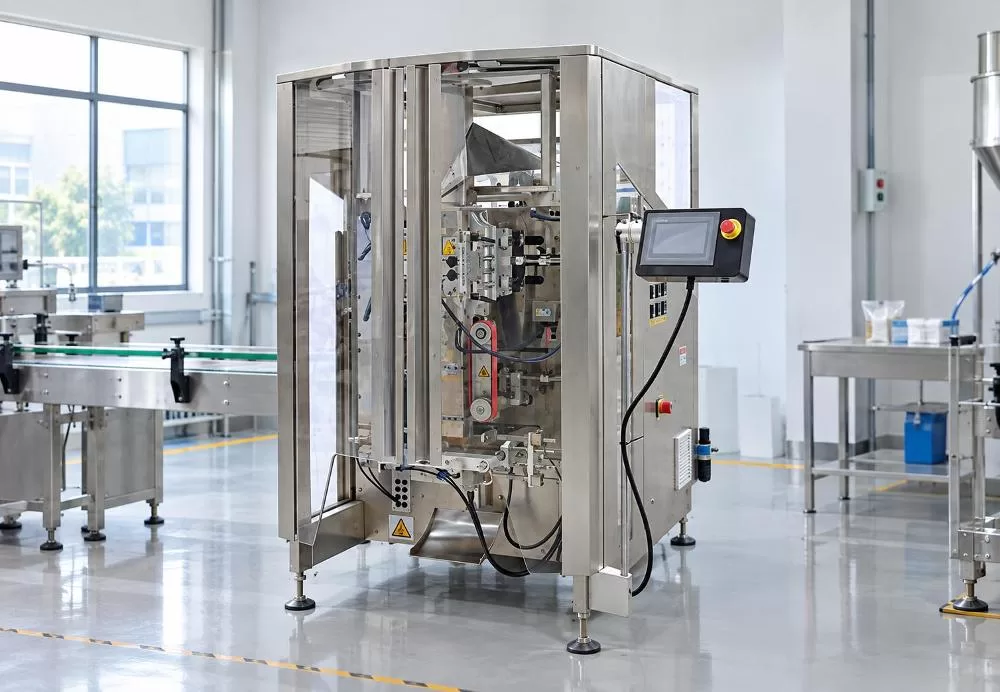
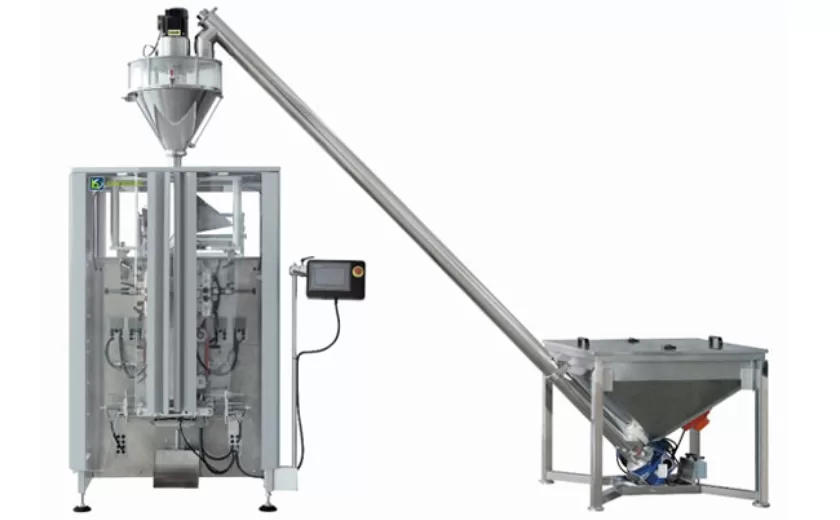
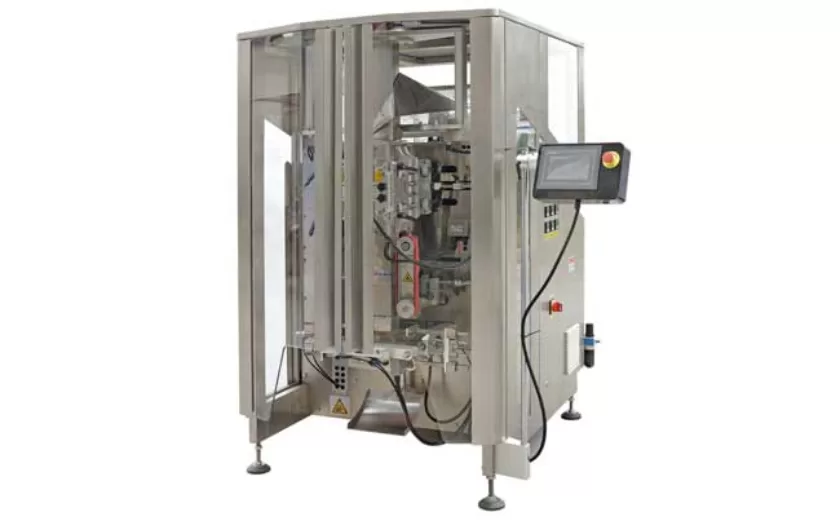
Baopack’s Quadro Bag Auger Powder Filling Machine CB-VT52A is one example of how this principle gets built into a full packaging line. Rather than filling alone, it handles bag forming, filling, sealing, date printing, and punching in one continuous automated sequence, according to the manufacturer’s specifications.
The film handling is driven by a servo motor with automatic deviation rectification, which keeps the film tracking straight as it forms each bag. Anyone who has run a line with a manual film guide knows how much downtime comes from film drifting off-center and jamming the sealer. Automating that correction is less about speed and more about reducing the number of times someone has to stop the line to nudge a roller back into place.
Bag Styles and Why That Choice Matters
Not every product belongs in the same bag shape, and this is a decision point buyers often underestimate. The CB-VT52A produces both pillow-type bags and standing bags, with optional euroslots and corner seals.
- Pillow bags suit bulk or food-service packaging where shelf presentation matters less than cost per unit.
- Standing bags suit retail shelves, since they hold their shape and display branding upright.
- Euroslots add a hang-hole for peg displays, common in spice racks and hardware aisles.
- Corner seals improve stability for standing bags carrying denser powders.
Choosing the wrong format doesn’t just look unprofessional on a shelf, it can also increase returns if bags won’t stand or display correctly at the point of sale.
Core Technical Specifications
Buyers evaluating an auger powder filling machine should compare these figures against their own production targets rather than looking at throughput alone.
| Specification | Value |
|---|---|
| Capacity | 45 bags/min |
| Filling range | ≤ 2.8L |
| Packing weight | 10–5000g |
| Filling accuracy | ±0.25–1% (depending on weight) |
| Bag size | Width 70–200mm, Length 100–350mm |
| Film thickness | 0.04–0.09mm |
| Power supply | 3P/380V or 1P/220V, 50/60Hz |
| Total power | 1.9KW–3.5KW |
| Dimensions | 800 x 1100 x 2150mm |
| Weight | 250kg–750kg |
The wide packing weight range, from 10 grams up to 5 kilograms, is what allows the same machine to run a sachet-sized spice pack in the morning and a bulk flour bag in the afternoon. That flexibility matters more to a co-packer running mixed SKUs than to a single-product plant, so weigh this spec against how varied your own product lineup actually is.
Accuracy Numbers Deserve a Closer Look
The stated filling accuracy of ±0.25–1%, varying by weight, is not a single fixed number, and that distinction trips up a lot of buyers comparing spec sheets. Tighter tolerances typically apply at larger fill weights where the auger can meter more precisely relative to the total volume, while smaller fills naturally carry a wider percentage band. When comparing two machines on paper, always ask which end of the weight range the quoted accuracy applies to, because a vendor quoting their best-case number for a 5kg fill isn’t telling you what happens at 50 grams.
Integration With Auxiliary Equipment
A filling machine rarely runs alone on a real production floor. The CB-VT52A is compatible with auxiliary devices including degassing valve systems and zipper applicators, per the manufacturer’s documentation. Degassing valves matter for powders like ground coffee that release gas after packaging, since a sealed bag without a release point can swell or burst on the shelf. Zipper applicators, meanwhile, serve resealable retail packaging, a feature increasingly requested for household-size spice and baking powder bags.
This is where thinking about the filler as part of a line, not a standalone unit, pays off during procurement. A machine that pairs cleanly with a nitrogen flushing system or a vibrating feeder table upstream will save far more integration headache than a filler with slightly better raw throughput but a closed architecture.
How to Match the Machine to Your Product
Selecting the right auger powder filling machine setup comes down to a short sequence of practical checks rather than guesswork:
- Identify your typical fill weight range and confirm it sits comfortably inside the machine’s stated packing weight band.
- Check bulk density and flowability of your powder, since very fine or static-prone powders may need additional dust control.
- Decide on bag style based on retail versus bulk distribution needs.
- Confirm film thickness compatibility with your chosen packaging material.
- Review power supply requirements against your facility’s electrical setup, particularly for 3-phase versus single-phase lines.
Skipping the density check is the most common mistake. A powder that flows well in a lab sample can behave very differently after sitting in a warehouse through a humid season, so it’s worth testing with the actual production-batch material, not a fresh sample.
Maintenance and Operational Considerations
The manufacturer describes the CB-VT52A as designed for easy operation and low maintenance, built around a PLC control system for stable performance. In practical terms, a PLC-driven machine reduces the guesswork in troubleshooting because fault codes and settings are visible on the control panel rather than buried in relay logic. For a plant running multiple shifts, this shortens the time between a fault occurring and an operator understanding what caused it.
That said, no automated filler eliminates maintenance entirely. Augers wear over time, particularly with abrasive powders, and seals around the filling head need periodic inspection. Budgeting for scheduled auger and seal checks, rather than waiting for a weight deviation to appear, keeps accuracy consistent over the life of the equipment.
Frequently Asked Questions
Can one auger powder filling machine handle both fine spice powders and coarser milled products?
Auger fillers are generally well suited to a range of powder textures, but very fine, static-prone powders may need dust containment accessories, while coarser or slightly granular products usually run without extra modification. Always confirm with the supplier based on your specific powder’s flow characteristics.
Does a wider filling accuracy range mean the machine is less reliable?
No. The accuracy range reflects that percentage-based tolerance naturally varies with fill weight, not a flaw in the equipment. A smaller fill weight will show a wider percentage deviation than a larger one, even with identical mechanical precision.
Is nitrogen flushing necessary for all powder products?
Not for all. It’s primarily relevant for oxygen-sensitive products like ground coffee or certain dehydrated foods where shelf life depends on limiting oxidation. Dry, stable powders such as many mineral or mining powders typically don’t require it.
Final Considerations Before Purchasing
Buying an auger powder filling machine isn’t just a matter of matching a capacity number to a production target. It’s a decision that touches film compatibility, bag format, auxiliary equipment, and how your specific powder behaves under real warehouse conditions. Baopack, founded in 2001 and based in Foshan, Guangdong, has developed over 20 series of automatic packaging machines for food, pharmaceutical, and industrial powder applications, and the CB-VT52A reflects that focus on integrating filling, forming, and sealing into a single automated process. Whatever brand a buyer ultimately chooses, the same due diligence applies: test with real product, verify accuracy at your actual fill weight, and confirm the auger powder filling machine fits cleanly into the rest of your packaging line rather than sitting as an isolated upgrade.


-
VFFS Equipment: The Ultimate Guide to Vertical Form Fill Seal Technology
13-03-2026 -
The Essential Guide to Weight Packing Machines for Precision Weighing
12-03-2026 -
Power Packing Machine: The Ultimate Guide to Heavy-Duty Packaging Efficiency
11-03-2026 -
Weigher Packing Machine: The Definitive Guide to Precision Weighing & Packaging
10-03-2026 -
Auger Type Powder Filling Machine: The Ultimate Guide to Precision Packaging
09-03-2026 -
Advanced Packing Solutions: Snacks, Sugar, and Frozen Food Machines
29-10-2025 -
Efficient and Reliable Solutions for Salt, Nuts, and Frozen Dumplings Packing
29-10-2025 -
High-Performance Biscuits, Lollipop, and Ketchup Packing Machines for Modern Food Production
29-10-2025 -
Efficient Liquid Filling and Packing Machines for Modern Production
23-10-2025 -
Reliable Granule Packaging Machines for Efficient Production
23-10-2025
