

Selecting the Right Granule Packaging Machine for Chemical and Pharmaceutical Use
Selecting the right granule packaging machine is an important decision for chemical and pharmaceutical manufacturers. Granular products can vary significantly in particle size, density, flowability, moisture sensitivity, and packaging requirements. A machine that works well for one product may not provide the required accuracy, protection, or production efficiency for another.
For pharmaceutical and chemical applications, the packaging system must do more than simply fill and seal bags. It should provide consistent dosing, reliable sealing, appropriate material contact surfaces, efficient operation, and easy cleaning and maintenance. Modern automatic granule packaging machines can integrate measuring, filling, sealing, coding, counting, and product conveying into one continuous process.
This guide explains the key factors manufacturers should consider when selecting a granule packaging machine for chemical and pharmaceutical products.
Understand the Characteristics of Your Granular Product
The first step in selecting a packaging machine is understanding the physical characteristics of the product.
Chemical and pharmaceutical granules may have different particle sizes, shapes, bulk densities, and flow characteristics. Some products flow freely through a filling system, while others may bridge, stick, or move inconsistently. These characteristics directly affect the choice of filling and feeding technology.
Manufacturers should evaluate:
- Particle size and shape
- Bulk density
- Flowability
- Moisture sensitivity
- Product abrasiveness
- Static electricity
- Required filling weight or volume
- Product sensitivity to mechanical handling
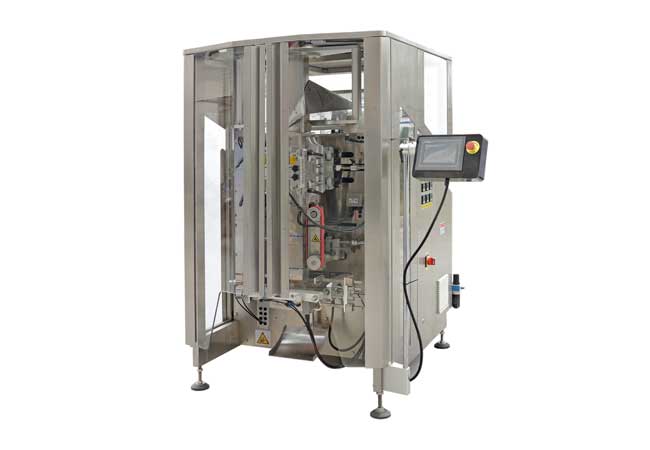
For relatively free-flowing granules, a volumetric cup filling system can be an efficient solution. Baopack’s granule packaging machines use volumetric cup technology for measuring granular products and can be configured for different packaging requirements.
For applications where weight accuracy is the primary consideration, a weighing-based filling system may be more appropriate. Understanding the product before selecting the filling mechanism helps prevent inconsistent dosing and unnecessary product waste.
Choose the Appropriate Filling Technology
Filling accuracy is one of the most important considerations in pharmaceutical and chemical packaging.
Volumetric cup fillers measure products according to volume. They are particularly suitable for granular materials with relatively consistent bulk density. Their advantages include simple adjustment, efficient operation, and high packaging speed.
Weighing systems, on the other hand, determine the quantity of product according to actual weight. This can be advantageous when the product’s bulk density varies or when the application requires tighter weight control.
The choice should therefore be based on the characteristics of the material rather than simply selecting the machine with the highest rated speed.
Baopack offers granule packaging systems with volumetric cup filling, while its broader product range also includes weigh filling machines and multihead weighing equipment. This allows the packaging configuration to be matched to the characteristics and requirements of the product.
Consider Material Compatibility and Hygiene
Material compatibility is particularly important in pharmaceutical and chemical environments.
Parts that come into contact with the product should be manufactured from suitable materials and designed to minimize contamination risks. Stainless steel is widely used in packaging equipment because of its durability, corrosion resistance, and suitability for applications requiring hygienic surfaces.
For example, Baopack’s granule packaging equipment uses stainless steel components, with product-contact components available in 304 stainless steel on specified models.
However, material selection should always be based on the specific chemical properties of the product. Certain aggressive chemicals may require additional consideration of corrosion resistance and component compatibility.
Manufacturers should also evaluate how easily the machine can be cleaned between production batches. A practical design should provide convenient access to product-contact areas and reduce areas where material can accumulate.
Evaluate Packaging Accuracy and Production Speed
A packaging machine must achieve an appropriate balance between accuracy and production capacity.
High-speed operation is valuable for large-scale manufacturing, but speed should not compromise filling consistency or package quality. The required production capacity should therefore be determined from the actual production target rather than choosing a machine solely according to its maximum rated speed.
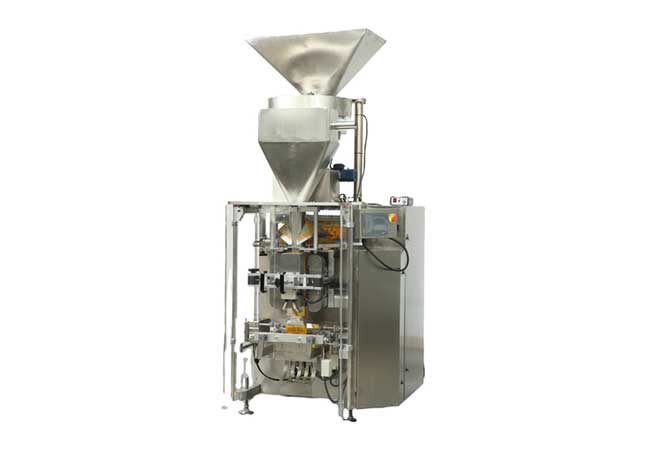
For example, Baopack’s CB-VP52A granule vertical packaging machine is designed for automatic feeding, measuring, filling, sealing, date printing, counting, and finished-product delivery when equipped with the corresponding feeding and measuring equipment. Its published specification lists a capacity of up to 60 bags per minute, depending on configuration and operating conditions.
When comparing machines, manufacturers should consider both nominal capacity and the expected real-world output for their particular product and package format.
Select the Right Bag Format and Packaging Film
The packaging format is another important factor.
Chemical and pharmaceutical granules may require pillow bags, gusset bags, standing pouches, or other customized formats depending on the product, distribution method, and end-user requirements.
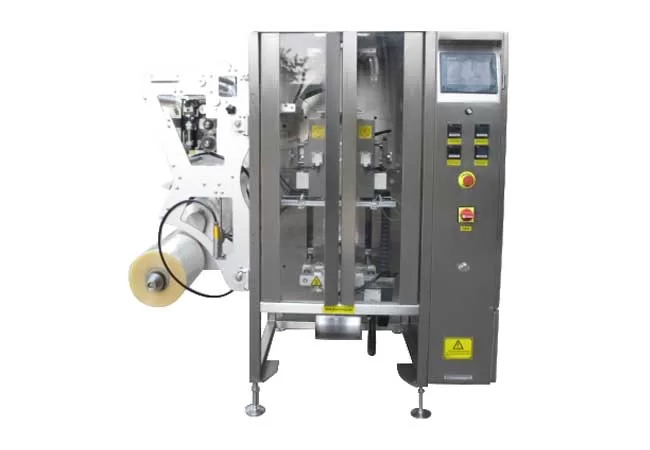
Vertical Form-Fill-Seal (VFFS) technology is commonly used when products need to be formed, filled, and sealed from a roll of flexible packaging film. A VFFS system can integrate multiple packaging functions into a relatively compact automated line.
When selecting a machine, check the following:
- Bag dimensions
- Film width
- Film thickness
- Sealing method
- Bag style
- Printing requirements
The packaging material itself should also provide the necessary barrier properties for the product. For moisture-sensitive pharmaceutical or chemical granules, packaging film selection can be just as important as the filling machine.
Look for Automation and Process Integration
Automation can significantly improve production consistency while reducing manual handling.
A modern granule packaging machine can integrate several processes, including feeding, measuring, filling, sealing, date coding, counting, and conveying. This reduces the number of manual steps between bulk product and finished packages.
PLC-based control systems and touchscreen interfaces can also simplify operation and parameter adjustment. Baopack’s granule packaging models incorporate PLC control systems and touchscreen operation, while servo-driven film systems are used on specified models for controlled film movement.
For chemical and pharmaceutical manufacturers, automation can also help establish more repeatable production processes. However, the appropriate level of automation depends on production volume, product variety, labor availability, and the required packaging workflow.
Pay Attention to Safety Features
Chemical products can present additional operational risks depending on their composition. The packaging equipment should therefore be selected with the product’s safety characteristics in mind.
Important considerations may include dust generation, static electricity, corrosion, operator exposure, and the potential need for specialized electrical or environmental protection.
The machine should also include appropriate alarm and protection functions. Baopack’s granule packaging equipment includes alarm systems designed to identify operating problems and help reduce material waste.
For hazardous or highly reactive chemical materials, however, standard packaging equipment may not be sufficient. Manufacturers should provide the machine supplier with accurate information about the product so that the appropriate engineering and safety requirements can be evaluated before equipment selection.
Consider Maintenance and After-Sales Support
Long-term operating costs should be considered alongside the initial purchase price.
A machine with convenient access to components, straightforward adjustments, and readily available replacement parts can help reduce downtime. Preventive maintenance should also be included in the production plan.
Supplier support is equally important for pharmaceutical and chemical packaging applications. Installation assistance, operator training, troubleshooting, spare parts, and technical support can all affect the long-term performance of the packaging line.
Baopack states that its packaging machines are supported by after-sales service and offers a one-year warranty for its machines. The company also provides technical support through online and offline service channels.
Match the Machine to Your Long-Term Production Goals
The right granule packaging machine should meet today’s requirements while allowing room for future production needs.
Before making a purchase, manufacturers should consider expected production growth, potential changes in package sizes, additional products, automation requirements, and integration with upstream and downstream equipment.
A complete packaging line may include a feeder, weighing or volumetric filling system, VFFS machine, date printer, checkweigher, metal detector, conveyor, and other auxiliary equipment. Baopack provides different filling, packaging, and auxiliary equipment that can be configured as part of an automated packaging solution.
Conclusion
Selecting the right granule packaging machine for chemical and pharmaceutical use requires more than comparing machine prices or maximum packaging speeds. Product characteristics, filling technology, material compatibility, packaging format, accuracy, automation, safety, maintenance, and technical support should all be evaluated together.
For manufacturers handling free-flowing granules, a volumetric cup filling and VFFS system may provide an efficient solution. Other products may require weight-based filling or a more specialized configuration. The most suitable choice depends on the specific product and production requirements.
Before purchasing equipment, it is recommended to provide the packaging machine supplier with detailed information about the product, target filling weight, package dimensions, packaging material, required output, and operating environment. A properly matched system can improve packaging consistency, reduce material waste, and support reliable long-term production.


-
VFFS Equipment: The Ultimate Guide to Vertical Form Fill Seal Technology
13-03-2026 -
The Essential Guide to Weight Packing Machines for Precision Weighing
12-03-2026 -
Power Packing Machine: The Ultimate Guide to Heavy-Duty Packaging Efficiency
11-03-2026 -
Weigher Packing Machine: The Definitive Guide to Precision Weighing & Packaging
10-03-2026 -
Auger Type Powder Filling Machine: The Ultimate Guide to Precision Packaging
09-03-2026 -
Advanced Packing Solutions: Snacks, Sugar, and Frozen Food Machines
29-10-2025 -
Efficient and Reliable Solutions for Salt, Nuts, and Frozen Dumplings Packing
29-10-2025 -
High-Performance Biscuits, Lollipop, and Ketchup Packing Machines for Modern Food Production
29-10-2025 -
Efficient Liquid Filling and Packing Machines for Modern Production
23-10-2025 -
Reliable Granule Packaging Machines for Efficient Production
23-10-2025
